ONE SERVING
Ingredients
- 240 ml (1 cup) very cold 2% or whole milk
- 60 ml (¼ cup) cold heavy cream
- 1–2 tablespoons thin vanilla syrup, optional
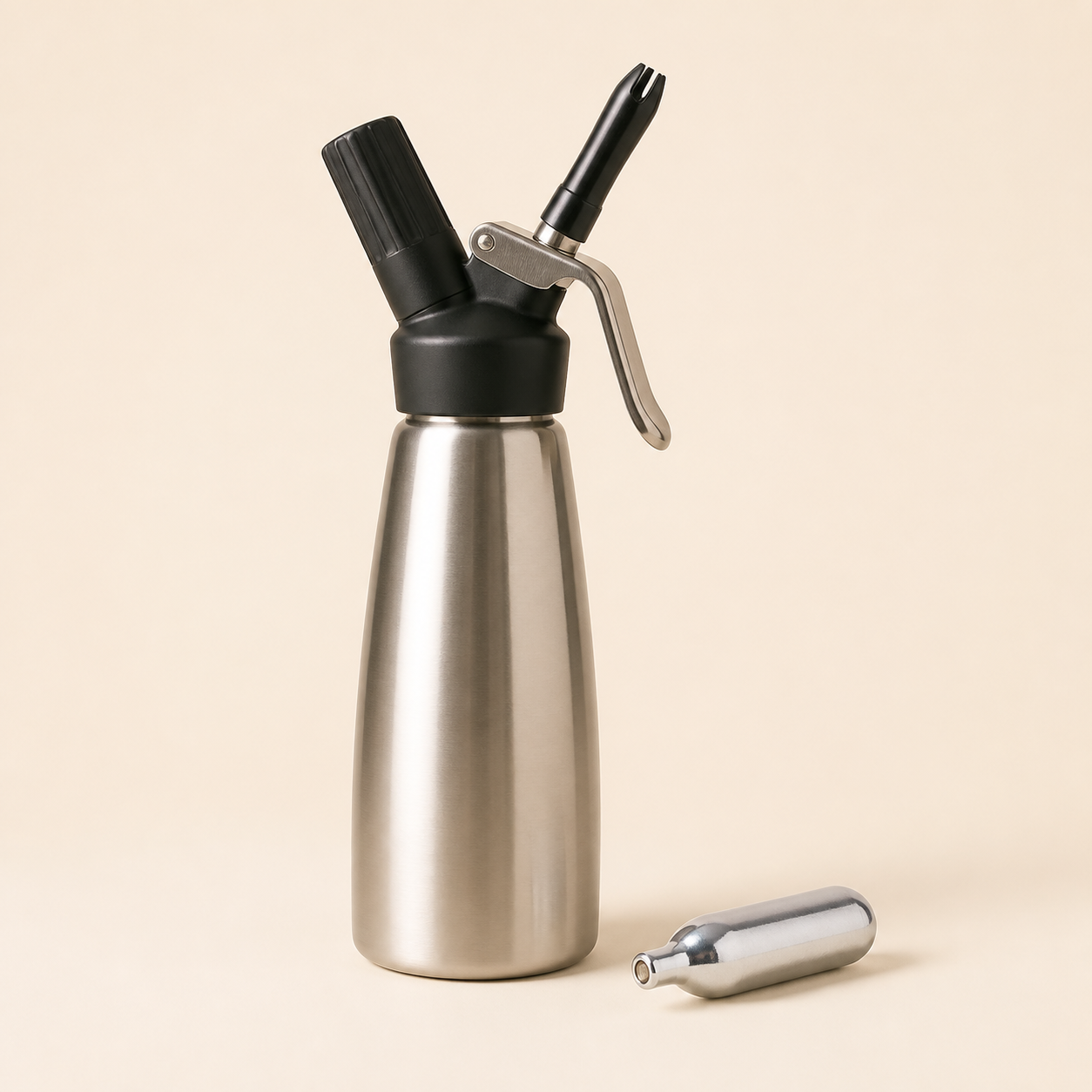
- A clean culinary dispenser rated for cold preparations
- The charger type and quantity specified by the dispenser manufacturer
THE METHOD
Step-by-step
- 01
Read the appliance manual, inspect the gasket and tip, and confirm the model is intended for this cold preparation.
- 02
Whisk the cold ingredients until completely smooth, then strain through a fine sieve before filling.
- 03
Pour only to the marked maximum fill line; leave the required empty space and secure the head and dispensing tip.
- 04
Charge exactly as the manufacturer directs. Never improvise the gas type, charger count or sequence.
- 05
Shake only as directed, test the first discharge into a bowl, then dispense with the appliance in the manufacturer-specified position.
01
Use a dispenser-compatible cold foam base
A milk-only mixture may dispense too loosely from equipment designed for whipped cream. Adding a modest amount of cream gives the liquid enough body while keeping it softer than traditional whipped cream. A four-to-one ratio of milk to cream is a practical starting point.
Thin vanilla or simple syrup blends easily. Avoid unstrained fruit, spice particles and thick sauces because solids can obstruct the dispensing path. When using fruit or pumpkin, blend the base completely and pass it through a fine sieve.
02
The manual controls the safe procedure
Culinary dispensers are pressurized appliances, and models do not all use the same charger quantity or operating sequence. Follow the manual supplied with your exact model for compatible ingredients, maximum fill, gas type, charger count, shaking and cleaning.
Use only chargers approved for the appliance and culinary application. Do not substitute CO₂ for a recipe designed around N₂O, do not exceed the stated fill line, and do not open the head while the dispenser is pressurized.
03
Fill, seal, charge and shake in order
Before filling, confirm that the gasket is seated correctly and the dispensing tip is attached as instructed. Measure the strained mixture rather than estimating. Secure the head straight and hand-tight according to the manual before installing a charger.
After charging, shake only the number of times recommended for the mixture and model. More shaking is not always better: an overworked cream-rich base can become too stiff to pour naturally over coffee.
04
How to dispense a coffee-friendly foam
Chill the filled dispenser for the time required by your recipe and appliance guidance. Test the first small discharge into a bowl so you can judge the texture without burying the drink under an unexpectedly stiff topping.
For cold foam, use gentle lever pressure and aim for a soft ribbon rather than a tall whipped-cream rosette. If the texture is too dense, revise the next batch with more milk; do not attempt to open or alter a pressurized dispenser.
05
Storage, cleaning and batch planning
A dispenser is most useful when serving several drinks. Make only an amount you can store and use within the food-safety limits given by the recipe and manufacturer. Keep dairy mixtures refrigerated and label flavored batches.
Fully empty and depressurize the appliance exactly as directed before disassembly. Clean the bottle, head, gasket, valve and tip after use; residue inside the valve can affect both hygiene and future dispensing.
Safety reference: iSi Gourmet Whip usage instructions. Your appliance manual always takes priority.
QUICK ANSWERS
Frequently asked questions
Can a whipped cream dispenser make cold foam?
Yes, if the dispenser is rated for the cold mixture and you follow its manual. A milk-and-cream base is generally more reliable than milk alone.
Should I use N₂O or CO₂ for cold foam?
Use only the gas type specified by your dispenser manufacturer and recipe. Culinary cream-whipper preparations commonly specify N₂O; CO₂ is not an interchangeable substitute.
How many chargers should I use?
Use exactly the quantity specified for your dispenser model and fill volume. Do not infer the count from another appliance or increase it to make thicker foam.
Why should the mixture be strained?
Seeds, pulp and spice particles can block the dispensing path. A fine sieve helps create a smooth base and protects the valve and tip.
Turn this guide into your recipe.
Choose your serving size and preferences, practice the technique, then take home a personalized formula.