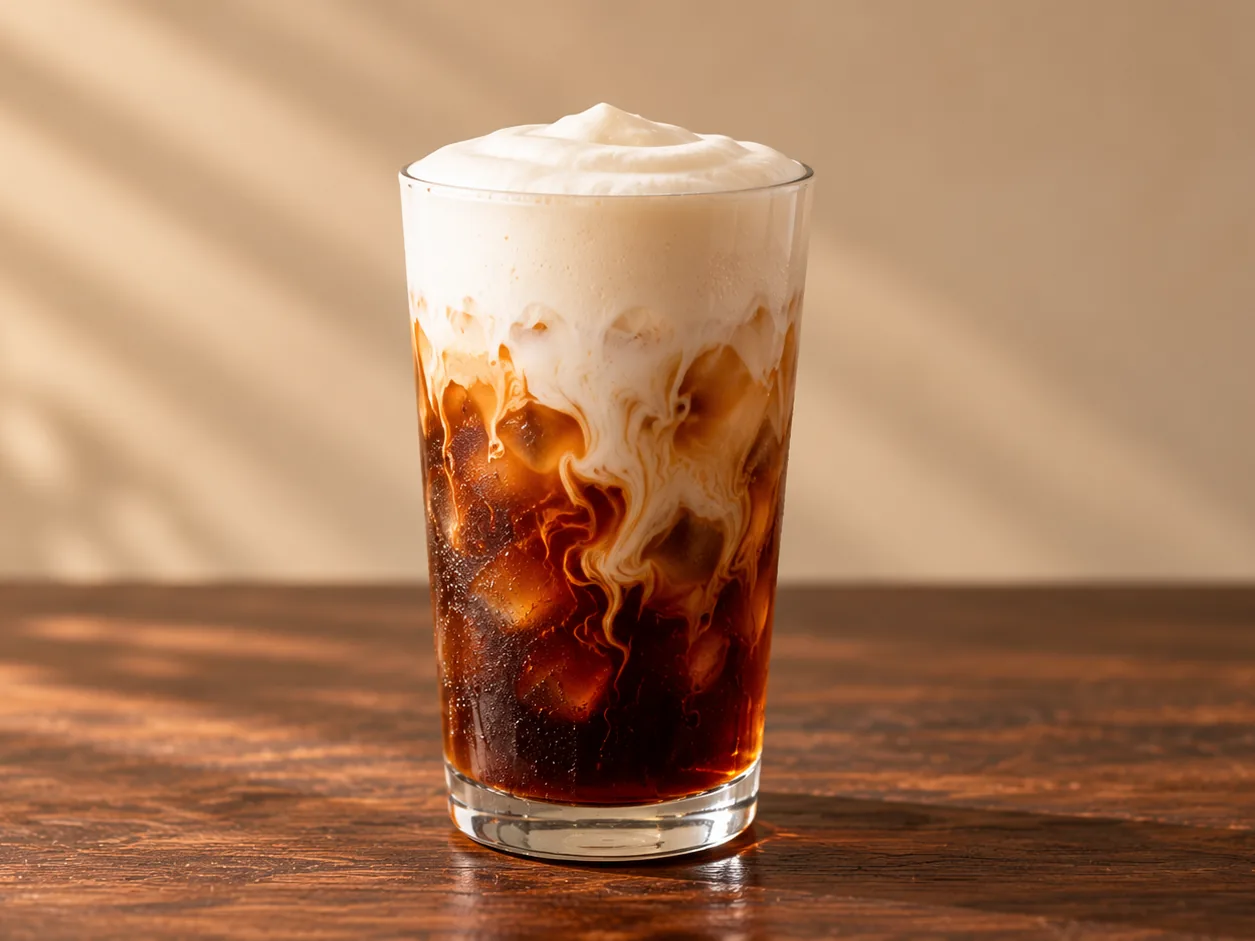
What is cold foam made of?
The simplest cold foam contains only cold milk. Low-fat milk creates plenty of airy volume because its proteins form a strong network around the bubbles. Whole milk produces a softer, creamier foam, while half-and-half makes a dense dessert-style topping.
Many café versions add vanilla syrup, simple syrup or another flavor before frothing. Sweet cream cold foam usually contains a blend of milk, cream and vanilla, so it is richer than standard cold foam.
Cold foam vs. whipped cream
Cold foam is fluid enough to pour and sip through. Whipped cream contains much more fat and is beaten until it holds stiff peaks, so it behaves like a dessert garnish. Cold foam should look glossy, form tiny bubbles and move when the glass is tilted.
It also differs from hot milk foam. Steam both heats the milk and stretches it with air; cold foam relies only on mechanical mixing, which is why starting with refrigerator-cold ingredients matters.
Cold foam vs. cold foam creamer
Grocery stores now sell products labelled “cold foam” in the creamer aisle. These are ready-made, usually sweetened and flavored, and come either in a can that dispenses foam directly or in a bottle meant to be frothed or shaken. They are convenient, but they are a store-bought product rather than the milk topping itself.
Homemade cold foam is simply cold milk—optionally with a little syrup or cream—frothed just before serving. It lets you control the sweetness, the milk and the ingredient list. Many cold foam creamers contain added sugar, oils and stabilizers, so check the label if those matter to you.
Why does cold foam float?
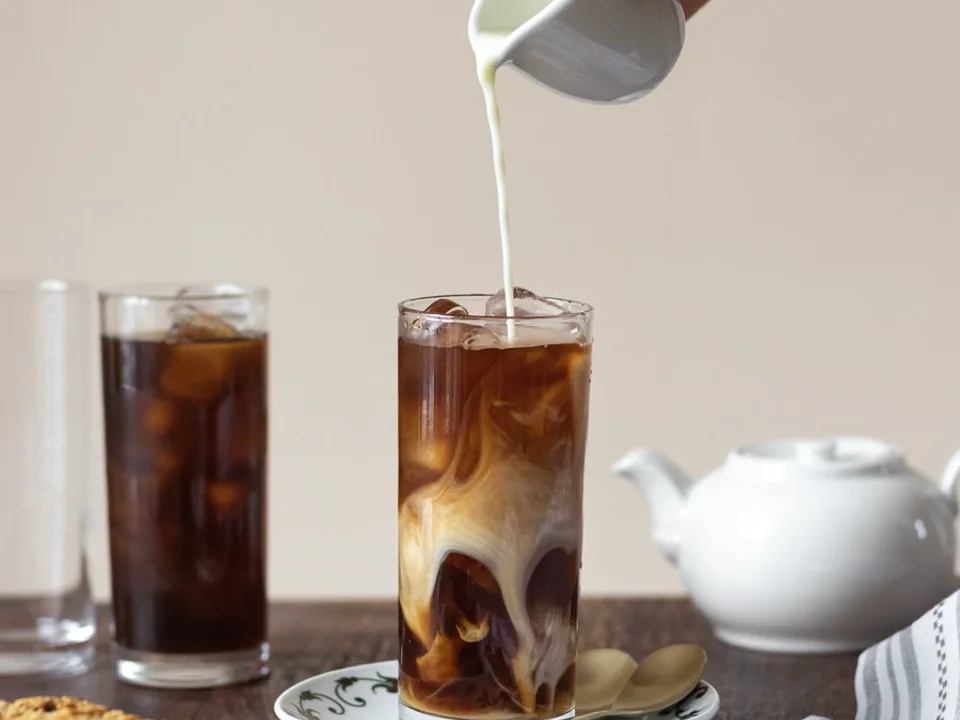
Frothing traps air inside a network of milk proteins. That lowers the foam’s density and helps it rest above denser coffee for several minutes. Small, even bubbles last longer than large dry bubbles, so the final deep-mixing stage is important.
Cold foam works best on iced coffee, cold brew, iced matcha and chai. Pour it immediately after frothing so the structure reaches the drink before it begins to separate.
The easiest way to try it
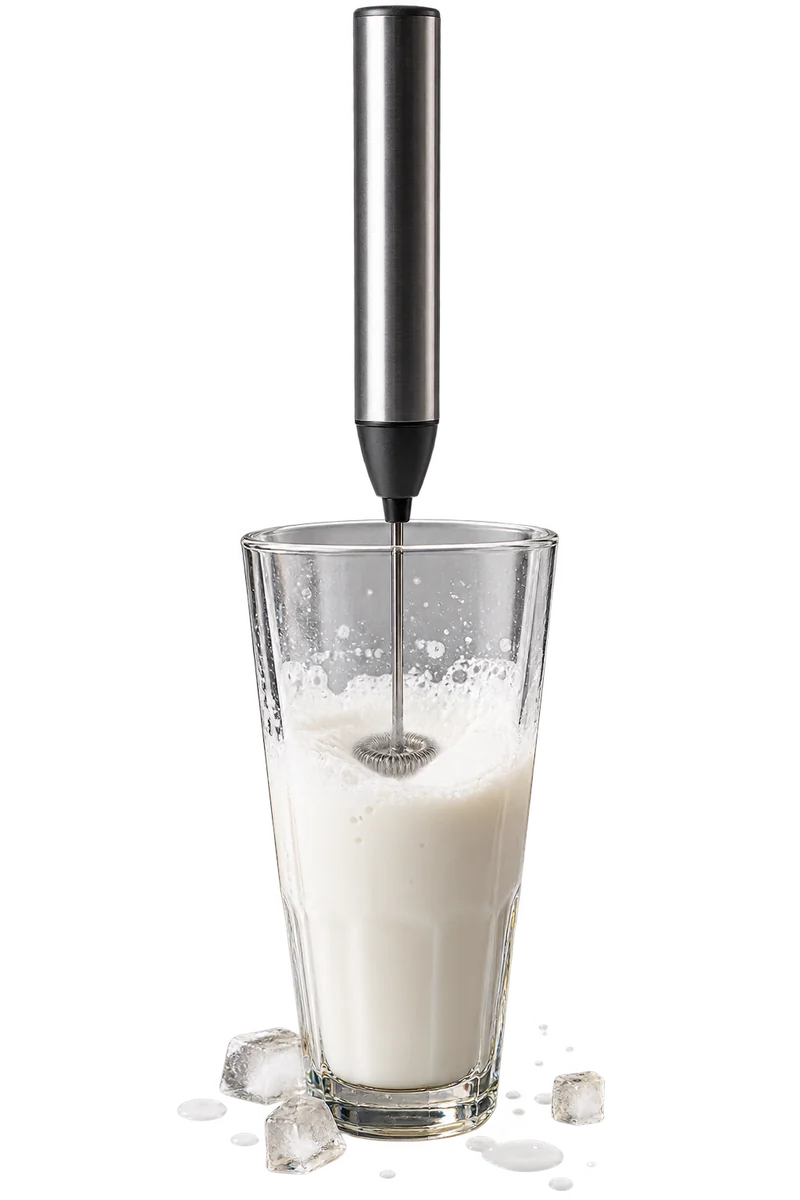
Measure 60 ml cold milk into a narrow container, add one or two teaspoons of syrup if desired, then froth at the surface for a few seconds. Move the whisk slightly deeper and continue until the texture is glossy. Our interactive cold foam game lets you practice the same sequence and gives you a take-home formula.
QUICK ANSWERS
Frequently asked questions
Is cold foam the same as whipped cream?
No. Cold foam is lighter and pourable, while whipped cream has more fat and is beaten until it can hold its shape.
Can you put cold foam on hot coffee?
You can, but it melts quickly. It is intended for iced drinks, where the temperature helps the bubbles stay stable.
Does cold foam contain coffee?
Usually not. It is a separate milk topping that is poured over coffee, matcha, chai or another cold drink.
Is cold foam a creamer?
Not exactly. Cold foam is frothed milk poured on top of a drink, while creamer is stirred in. Some brands sell “cold foam creamers”, which are sweetened ready-made products that create a foam topping.
What is cold foam creamer used for?
It is a shortcut for topping iced coffee with a sweet foam layer without frothing milk yourself. Use it on iced coffee or cold brew the same way you would use homemade cold foam.
Build a recipe for your cup.
Choose a cup size, milk and sweetness to get the amounts and first texture cue.